The publication of the Makin Review has renewed concerns about conservative evangelical leadership in Britain. It showed that John Smyth’s abuse was covered up for decades by leaders who thought secrecy was necessary to protect the work of God:
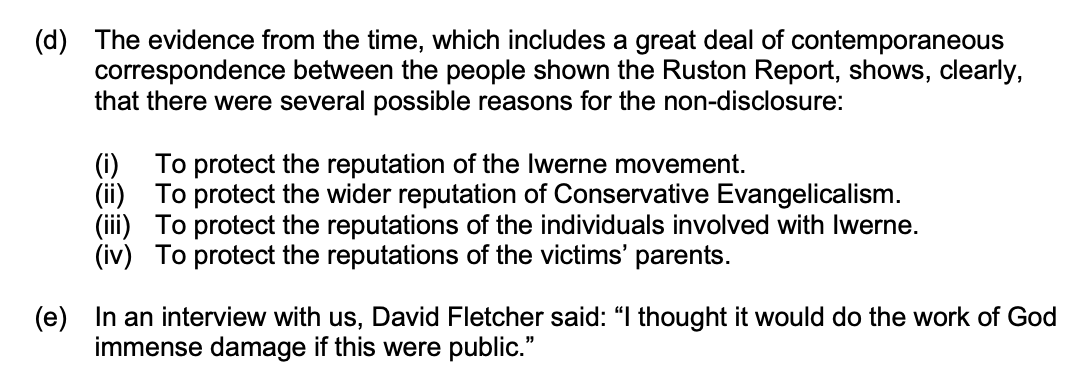
The result of their actions was that Smyth was quietly banished to Africa, where his abuse continued. Has the culture that sustained the Smyth cover-up changed, or is it the same as ever?
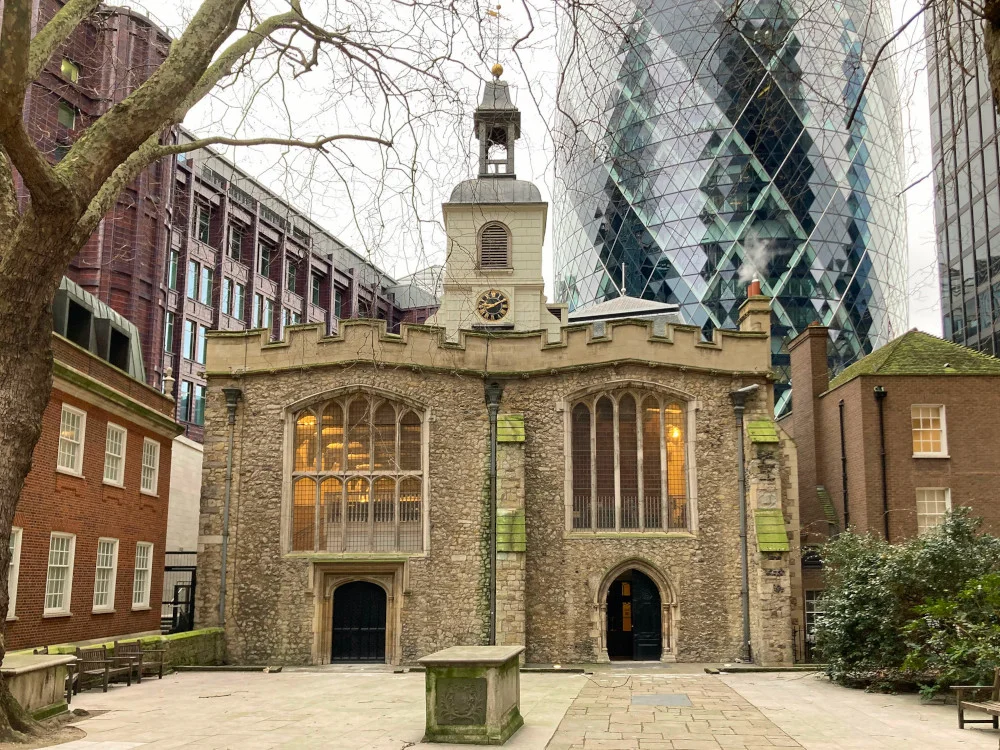
One of the most prominent British conservative evangelical churches is St Helen’s Bishopsgate. In two separate cases with safeguarding implications, St Helen’s has remained silent instead of answering necessary questions. In a third case, regarding a banned antisemitic pastor, St Helen’s has also refused to answer necessary questions. These three cases show St Helen’s has the same tendency to hide behind unbiblical secrecy demonstrated throughout the Smyth scandal.
This article will look mainly at one of the safeguarding-related cases, and then briefly at the other two cases. For the purposes of this article, “cover-up” refers to a situation where significant information that ought to be publicly known is very deliberately withheld from public view.
Case #1: A Disgraced Pastor
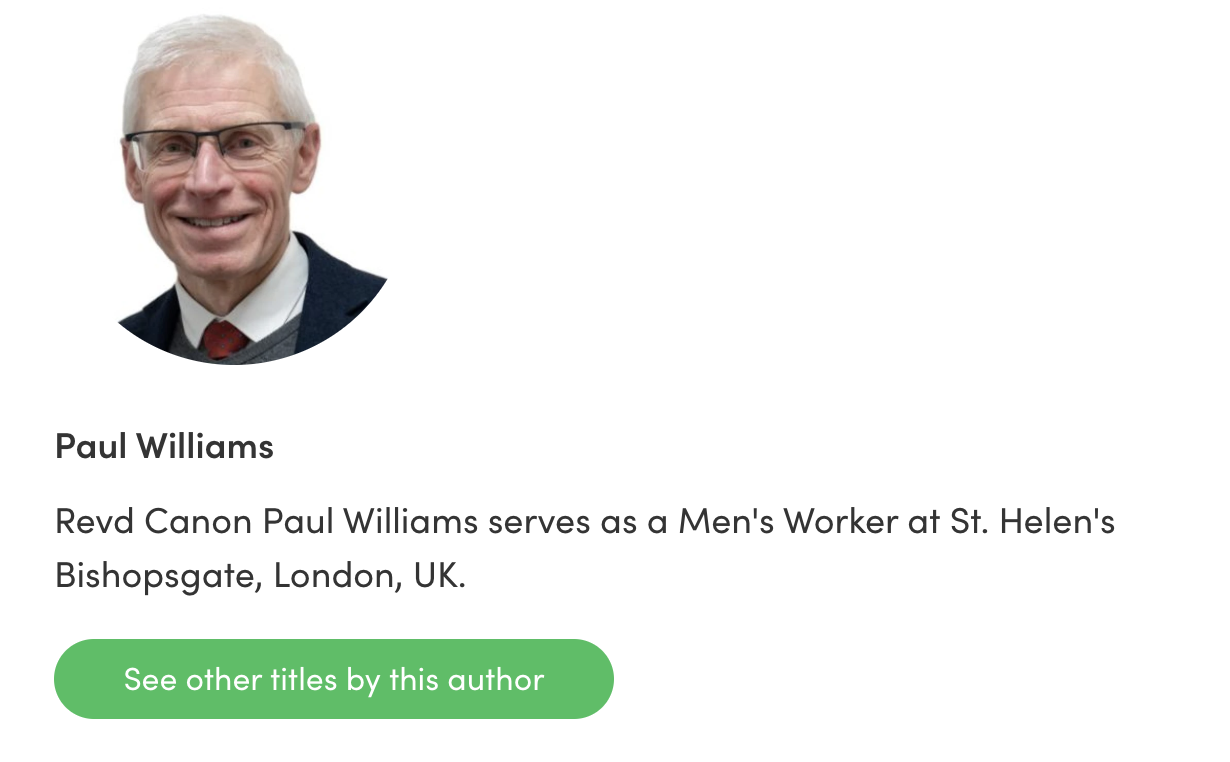
Paul Williams, formerly the senior minister of Christ Church Fulwood in Sheffield, is a regular preacher at St Helen’s:

Williams resigned from Christ Church Fulwood in September 2021 for reasons discussed below. He’s been preaching at St Helen’s since February 2023. He doesn’t appear on the church’s “Meet Our Team” webpage, but his publisher describes him as “a Men’s Worker at St. Helen’s Bishopsgate”. In addition, the Church of England has acknowledged that Williams has been given permission to officiate in London. This wouldn’t have been granted without discussion of the work he would undertake, which indicates the formal nature of his role at St Helen’s.
Resignation from Christ Church Fulwood
Information from Christ Church Fulwood has been regrettably minimal. Williams himself has failed to explain why he resigned. But two incidents in particular made it impossible for him to continue in leadership at Christ Church. The incidents were investigated by a safeguarding organisation and by an episcopal visitation. Documents from those investigations were shown to Sheffield’s local newspaper, The Star, which published an article in 2022 reporting what had happened. Both incidents involved Tim Cudmore, who worked under Williams as Christ Church’s Director of Ministry.
The First Incident
The first incident came to Williams’s attention in 2015. According to The Star, Cudmore “admitted … he had received an image by text message” from a female congregation member. The article strongly suggests that Williams should have taken firmer disciplinary action: “Although [Cudmore] was asked to step back temporarily from leading services, no formal action was taken at the time, nor were any records made.”
If Williams possessed enough incriminating evidence to remove Cudmore from leadership, his failure to do so would amount to a very serious safeguarding offence.
The Second Incident
By 2018, when the second incident came to light, Cudmore had been given an additional role: parish safeguarding officer.
The documents shown to The Star describe how Cudmore exploited “a relationship of trust” with a young female congregation member: he “initiated and pressured her into inappropriate physical contact, including touching her over and under clothes”. This abuse “left her confused with conflicting emotions, and the sense of acute guilt that came from these feelings”. When Williams found out about this, Cudmore “was simply allowed to resign”. There was no formal investigation and no disciplinary action was taken.
What Should Paul Williams Have Done?
The New Testament is very clear about what should have happened: Williams should have overseen a formal process of church discipline (see Matthew 18:15–18). When Cudmore’s guilt was established, Williams should have informed the church: “Publicly rebuke [elders] who sin, so that the rest will be afraid” (1 Timothy 5:20).
The danger of letting Cudmore quietly resign ought to be obvious. He could stay in contact with Christ Church’s members, telling them whatever he wished about his departure. Williams’s negligence left them at risk from Cudmore, a trusted, familiar face who, without their knowing it, was guilty of sexual and spiritual abuse.
Another danger was the possibility that Cudmore could find work at a different church and commit further abuse. The quiet resignation was, in effect, an appalling cover-up.
A Public Statement from Christ Church Fulwood
On 1 September 2022, Christ Church’s associate vicar, churchwardens, and safeguarding officers released a statement about the “failings in leadership and church culture” which took place “over a number of years” while Williams was senior minister:
The last two years for the church family at Christ Church Fulwood have been very sad and painful. Failings in leadership and church culture over a number of years have been starkly exposed in the Bishops’ Visitation report and the thirtyone:eight safeguarding report, which we received in the summer of 2021. … In particular, the circumstances described in the thirtyone:eight report should never have happened. They were not … dealt with in the right way at the time due to a culture of secrecy which had been allowed to develop in our church. The delay in bringing matters to light was simply unacceptable. … We have formally apologised to the victim for letting her down so badly, and we are determined, with God’s help, to develop a culture of openness and transparency within our church. … Our prayer is that with God’s help such a harmful culture will never develop again within our church.
That statement was publicly issued in Evangelicals Now. Just five months later, Paul Williams, the senior minister who had presided over “such a harmful culture”, began his role as a preacher at St Helen’s. He’s preached more than forty times since February 2023. His track record of harmful leadership and “delay in bringing matters to light” didn’t stop St Helen’s from entrusting him with the spiritual authority inherent in preaching.
A Rehabilitation That Should Never Have Happened
By giving Williams a preaching role, St Helen’s has rehabilitated him as a Christian leader. His standing and credentials have been restored, which would allow him to take up a more formal leadership position at another church, even as a senior minister once again.
This rehabilitation is unjustified. One of the essential qualifications for Christian leadership is that a leader should be “above reproach” (Titus 1:7), which means Christian leaders mustn’t be guilty of serious sin that discredits Christ and his people. Williams’s conduct at Christ Church Fulwood certainly didn’t meet that standard. Similarly, Christian leaders are required to set a good example to believers (1 Tim. 4:12, 1 Peter 5:3). Williams did the opposite. In his handling of the second incident involving Cudmore (and most likely the first incident too) he demonstrated reckless irresponsibility.
Williams has had multiple opportunities to publicly express repentance for his leadership failings at Christ Church. He hasn’t taken them. This makes the decision by St Helen’s to restore his status as a Christian leader all the more grievous. Repentance is an indispensable feature of true Christian living.
The Silence of St Helen’s
A year ago, St Helen’s was publicly criticised for rehabilitating Williams in an article that received a wide readership after it was cited by the website Anglican Ink. St Helen’s hasn’t offered any response to that article, or any public explanation for its decision to restore Williams to Christian leadership. Like the leaders involved in the Smyth cover-up, the leaders of St Helen’s evidently prefer silence to transparent answers.
St Helen’s might be privately saying that Williams’s official clearance from the Church of England shows he himself doesn’t represent a safeguarding threat. But that misses the point, which is that negligent leaders put vulnerable people at risk from others, who do represent direct safeguarding threats. The facts show that Williams created a culture of secrecy that put vulnerable people in danger. As his own former colleagues said, “The delay in bringing matters to light was simply unacceptable.”
What’s more, St Helen’s has now established a precedent for other evangelical leaders guilty of serious negligence in safeguarding cases: instead of seeking work outside of Christian leadership, as they should, they can now expect to resume regular pulpit work after an eighteen-month break. If challenged, they can point to St Helen’s and Paul Williams to justify their return to preaching. By setting this precedent, and by maintaining conservative evangelicalism’s secretive culture, St Helen’s is preparing the way for evangelicalism’s next scandal. The biblical requirements for Christian leadership must be honoured, not ignored.
G. Campbell Morgan, a renowned preacher in mid-20th century London, wrote that “sanctuary is a place having no complicity with the evil which makes sanctuary a necessity.” When leaders guilty of serious misconduct are restored to leadership elsewhere in the evangelical network, evangelicalism is no longer a sanctuary.
Case #2:
St Helen’s & the Fletcher Scandal
As discussed in detail elsewhere, questions remain unanswered about the role of William Taylor (Senior Minister of St Helen’s) and Brian O’Donoghue (longtime St Helen’s staff member) in the Jonathan Fletcher scandal.
Either William Taylor didn’t tell the truth about when he first heard of Fletcher’s abuse, or, alternatively, Brian O’Donoghue committed a safeguarding offence by failing to warn Taylor before a St Helen’s-administered conference where Fletcher was present.
In response to that either/or, the churchwardens of St Helen’s have stated both that Taylor told the truth and also that O’Donoghue “acted properly in not informing William.” But the churchwardens didn’t back up those claims with any publicly-disclosed evidence, and the “acted properly” claim contradicts a core safeguarding principle (namely, protecting people overrides confidentiality and is allowed by law). Due to the absence of supporting information, it’s accurate to say that the conduct of Taylor and O’Donoghue in the Fletcher scandal remains covered up.
Case #3:
St Helen’s & the Sizer Scandal
In December 2022, Stephen Sizer, a conservative evangelical Anglican minister, was found guilty of antisemitic activity by a church tribunal. The tribunal banned him from “exercising any of the functions of his Holy Orders” for twelve years. This ministry ban came after a decade in which conservative evangelical leaders had persistently refused to take action against Sizer.
Sizer’s church belonged to the South East Gospel Partnership, which at that time was led by William Taylor. Taylor’s negligence concerning Sizer led to the following comment in the Journal of Contemporary Antisemitism: “It is difficult to avoid concluding that the individual who bears most responsibility for the failure of British conservative evangelicals to take action against Dr. Sizer is Rev. Taylor.”
One of the clearest instances of Sizer’s wrongdoing was his attempt to divert church mission funds to an openly pro-Hamas group running convoys from Britain to Gaza. This was brought to Taylor’s attention in 2012, but rather than taking responsible action against a leader in his own network, he held to his position that there were “no justifiable grounds for breaking gospel partnership with Stephen or with Christ Church Virginia Water.” Due to Taylor’s negligence, it would take a further ten years before Sizer was finally brought to justice.
Taylor has never altered his stated position on Sizer, not even after the Church of England tribunal’s guilty verdict in December 2022. He’s never apologised to the Jewish community for tolerating Sizer’s presence in his network.
In 2022, Taylor’s negligence regarding Sizer was brought to the attention of one of the churchwardens of St Helen’s. He was sent a briefing note, which he shared with the St Helen’s Standing Committee. The churchwarden then wrote, “St Helen’s doesn’t propose to take any further steps in relation to these historic matters. Additionally, having spoken to William, he also does not propose to take this further.” The language might be politely polished, but this response is yet another example of a church culture that prefers silence to repentance.
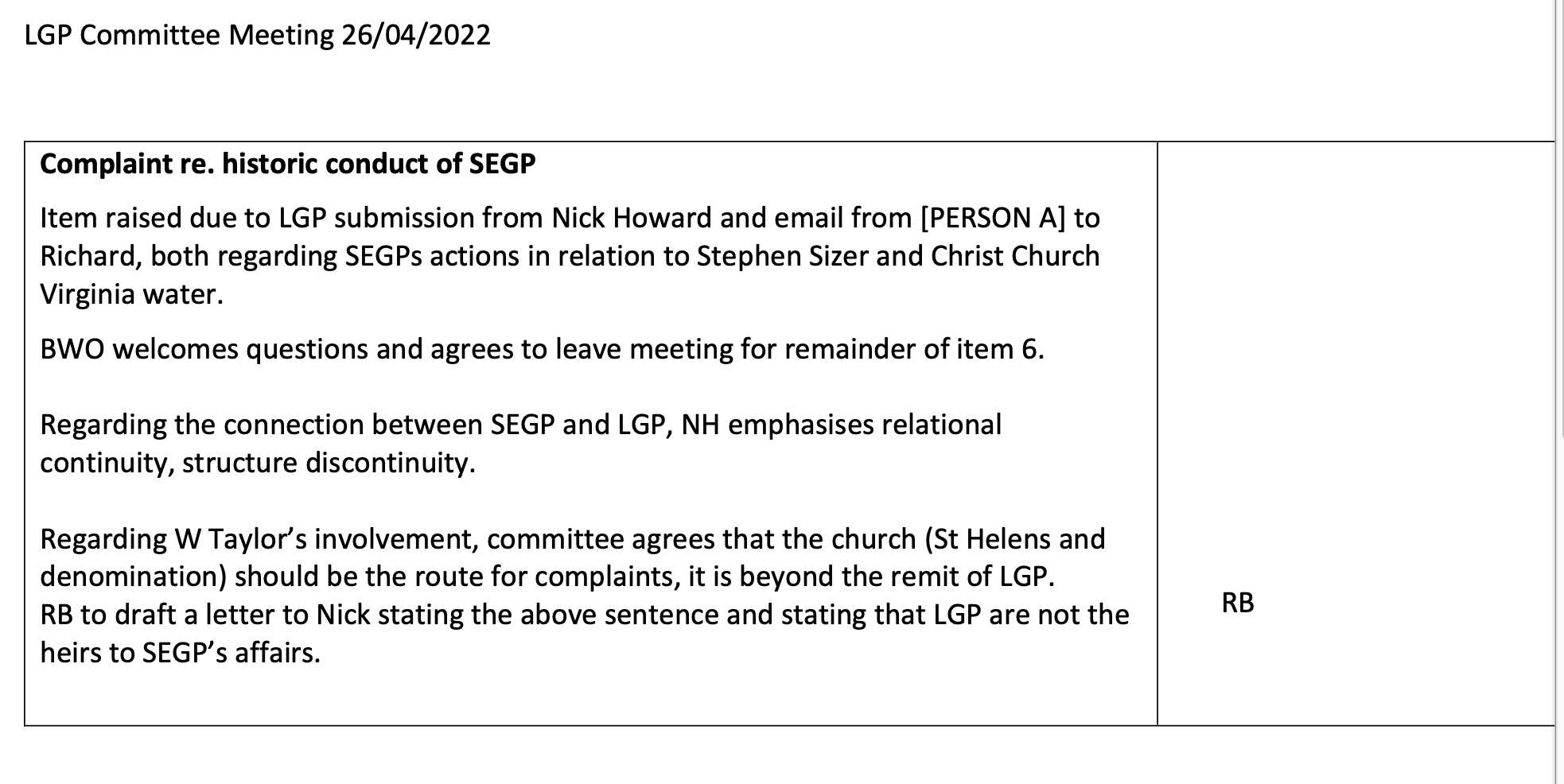
Importantly, the London Gospel Partnership – an organisation to which St Helen’s belongs – thought it was right to seek answers from St Helen’s. Committee minutes obtained via Subject Access Request identify St Helen’s as a proper “route for complaints” about Taylor’s handling of the Sizer case. The LGP Committee’s opinion shows it was reasonable to expect St Helen’s to address the complaint. St Helen’s is, therefore, objectively failing to meet evangelical norms.
These three cases reveal a pattern of behaviour that shows no sign of ending. St Helen’s covers up its wrongdoing by refusing to engage openly and transparently with criticism of its conduct. Its members are expected to trust in the righteousness of their leaders without being shown the relevant evidence. In this way, St Helen’s uses silence to cover up its leaders’ misdeeds. The doctrines of St Helen’s are sound; its conduct, on the other hand, is untrustworthy.



Leave a comment